

You’ve built a solid party rental business with great equipment and reliable service. Customers love what you do. But when someone in your area searches for “bounce house rental” or “tent rental near me,” are they finding you or your competitor?
Most party rental owners know they need digital marketing, but the options feel overwhelming. SEO, Google Ads, Facebook, email, websites, reviews — where do you even start? And how do you know what’s actually worth your time and money?
This guide walks through every digital marketing channel that matters for party rental companies, what each one does, when it makes sense, and how to prioritize your efforts without wasting budget on tactics that don’t fit your business.
What’s Covered in This Guide
- Where Party Rental Customers Actually Search
- Local SEO: The Foundation of Party Rental Marketing
- What Your Website Actually Needs to Convert Visitors
- When Google Ads Make Sense for Rental Companies
- Using Facebook and Instagram to Build Brand Awareness
- Email Marketing for Repeat Customers and Referrals
- Reviews and Reputation Management
- How to Budget and Prioritize Your Marketing Channels
- Frequently Asked Questions
📍 You’re Just Starting Out
You’ve got equipment and maybe a few regular customers, but you need consistent visibility. Focus on claiming your Google Business Profile, building a basic website with clear inventory and contact info, and collecting your first 10-15 reviews.
Priority: Local SEO foundation + website
📈 You’re Growing and Competitive
Your calendar fills during peak season, but you want more bookings year-round and better margins. You’re competing with 3-5 other rental companies. Invest in SEO content, conversion-optimized landing pages, and strategic Google Ads during high-demand periods.
Priority: SEO + seasonal paid search + email
🏆 You’re Established, Want to Dominate
You’ve been in business 5+ years with strong word-of-mouth. Now you want to own your market digitally — rank #1 for every relevant search, capture corporate clients, and expand your service area. Execute a full digital ecosystem with advanced SEO, retargeting ads, and CRM-driven email automation.
Priority: Full-funnel strategy across all channels
Where Party Rental Customers Actually Search
Before you invest in any marketing channel, understand where your customers start their search. Party rental customers typically follow one of three paths:
Google Search (60-70% of new customers) — Someone planning a birthday party, graduation, or corporate event types “bounce house rental near me” or “tent rental [city name]” into Google. They’re ready to book soon, comparing 2-4 companies, and looking for clear pricing, availability, and reviews.
Social Media (15-25%) — A parent sees photos from a friend’s party on Facebook or Instagram and asks “who did you use for the bounce house?” These customers are earlier in the planning process and more influenced by visual proof and social validation.
Direct Referrals and Repeat Customers (10-20%) — Past customers come back for another event or refer friends and family. These are your highest-value leads with the lowest acquisition cost, which is why email and reputation management matter.
💡 Key Insight: Google captures high-intent customers ready to book. Social media builds awareness and nurtures consideration. Email and reviews maximize repeat business. You need all three working together, but Google search is where most rental bookings start.
Local SEO: The Foundation of Party Rental Marketing
Local SEO is the single highest-ROI digital marketing investment for party rental companies. Unlike paid ads that stop working the moment you stop paying, local SEO builds compounding visibility that drives leads month after month.
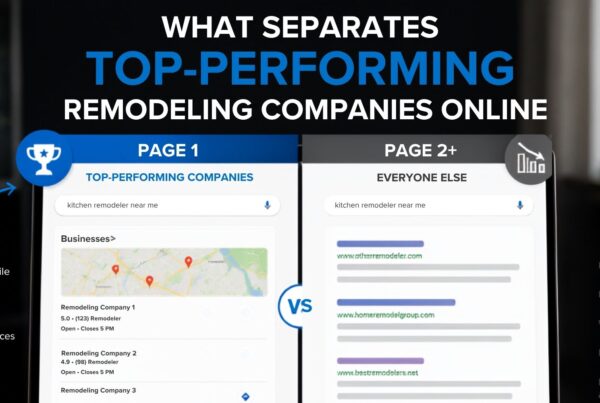
When someone searches “party rental near me” or “bounce house rental [your city],” Google shows a map with three businesses — the Local Pack. Getting into that top three means you’re visible to every customer in your area searching right now, without paying per click.
The Core Components of Local SEO
Google Business Profile
Your listing in Google Maps and local search results. Must be claimed, verified, and fully completed with accurate business name, address, phone, hours, service area, categories, and photos of your equipment.
Reviews and Ratings
Google prioritizes businesses with consistent positive reviews. Aim for 25+ reviews with an average rating above 4.5 stars. New reviews signal active business and improve rankings.
Website Content and Pages
Dedicated pages for each rental category (bounce houses, tents, tables, chairs) and service areas help you rank for specific searches. Content should answer customer questions naturally.
Local Citations
Your business name, address, and phone number listed consistently across directories like Yelp, Yellow Pages, and industry sites. Consistency signals legitimacy to Google.
Local SEO typically takes 3-6 months to show meaningful results, but once you rank well, you’re capturing organic traffic that converts at 2-3x higher rates than paid ads because customers perceive top organic results as more trustworthy.
⚠️ Common Mistake: Setting up your Google Business Profile once and ignoring it. Google rewards businesses that post updates, respond to reviews, and keep information current. Spend 15 minutes weekly updating photos and responding to reviews to maintain visibility.
What Your Website Actually Needs to Convert Visitors
Your website has one job: turn visitors into phone calls, quote requests, or bookings. Too many party rental websites are digital brochures that look nice but don’t convert because they’re missing the information customers need to make a decision.

The Five Elements Every Party Rental Website Must Have
Clear Inventory with Photos
Customers want to see exactly what they’re renting. Each item should have:
- High-quality photos showing the item set up
- Dimensions and capacity
- Pricing or “request quote” option
- Age range or usage guidelines
Pricing Transparency
You don’t need exact prices for every item, but customers need pricing signals. Show starting prices, package pricing, or typical rental costs. “Call for pricing” on everything creates friction and loses conversions.
Mobile-Friendly Design
65% of party rental searches happen on mobile devices. Your site must load fast, display properly on phones, and make it easy to tap a phone number to call. If your site was built before 2020, it likely needs a mobile overhaul.
Obvious Contact Options
Phone number in the header, visible on every page. Simple contact form that asks only for name, email, phone, event date, and message. Online booking or quote request system if you offer it. Make it impossible to miss how to reach you.
Social Proof and Trust Signals
Display Google review rating and count prominently. Show photos from real events (with customer permission). Include safety certifications, insurance details, or years in business. Customers are inviting your equipment into their events — they need to trust you.
A website that converts doesn’t need to be expensive or flashy. It needs to answer the visitor’s core questions fast: What do you have? How much does it cost? How do I book it? Can I trust you?
When Google Ads Make Sense for Rental Companies
Google Ads put you at the top of search results instantly, but you pay every time someone clicks. For party rental companies, paid search works best in specific situations — not as a year-round strategy for everyone.

When Google Ads Are Worth the Investment
Peak Season Demand — If you’re fully booked from April through October with organic traffic, running ads during those months makes sense. You’re capturing overflow demand and customers who need last-minute bookings at premium rates.
New Market Entry — Launching in a new city or expanding your service area? You don’t have local SEO authority yet. Google Ads give you immediate visibility while your organic presence builds over 6-12 months.
High-Value Inventory — Corporate event packages, luxury tents, or specialty items with $1,000+ rental fees justify higher ad costs. If your average booking is $2,500 and you’re paying $30 per click, you only need a 1.2% conversion rate to break even.
Competitive Local Markets — In cities with 10+ party rental companies, organic rankings are slow to achieve. Strategic ads for high-intent keywords (“rent bounce house today,” “party tent rental this weekend”) capture customers ready to book now.
↑ What Pushes Ad Costs Up
- Broad, generic keywords (party rentals)
- Poor landing page experience
- Targeting outside your service area
- Running ads year-round in seasonal markets
- Low Google Quality Score from weak ad copy
↓ What Keeps Ad Costs Down
- Specific, local keywords (bounce house rental [city])
- Dedicated landing pages for each rental type
- Geographic targeting to exact service radius
- Seasonal campaigns during peak months only
- Strong ad copy with clear pricing signals
Most party rental companies should start with a modest monthly budget ($500-1,500) focused on a handful of high-intent keywords. Test, track which keywords convert to actual bookings, then scale what works and cut what doesn’t.
🚨 Non-Negotiable: If you’re running Google Ads without call tracking or conversion tracking, you’re burning money. You must know which keywords generate actual bookings, not just website visits. Implement tracking before you spend a dollar on ads.
Using Facebook and Instagram to Build Brand Awareness
Social media doesn’t generate immediate bookings the way Google does, but it plays a critical role in staying top-of-mind and building local brand recognition. When someone sees your bounce houses at three different birthday parties on their Facebook feed, you become the default choice when they need a rental.
What Actually Works on Facebook and Instagram for Party Rentals
Real Event Photos (User-Generated Content) — Ask customers if you can share photos from their events. Kids laughing on a bounce house, a beautifully set tent, or a perfectly arranged party setup performs better than staged product photos. Real moments feel authentic and shareable.
Before/After Transformations — Show an empty backyard, then the same space transformed with your rentals. Visual proof of value resonates with people planning events who are trying to imagine what’s possible.
Seasonal Promotions and Availability Updates — “Spring booking is open — reserve your graduation party rentals now” or “New inventory: 40ft obstacle course just arrived.” Keep followers informed about what’s new and when to book.
Behind-the-Scenes Setup and Delivery — Time-lapse videos of your crew setting up a large tent or installing inflatables humanizes your business and shows professionalism. People hire rental companies they trust to show up on time and set things up correctly.
💡 Posting Strategy: Consistency beats perfection. Post 2-3 times per week with authentic content rather than stressing over daily posts with stock photos. Engage with comments and messages within a few hours — responsiveness builds trust.
When to Use Facebook Ads
Organic social reach is limited — only 5-10% of your followers see your posts. Facebook and Instagram ads extend your reach and let you target specific audiences. Use social ads for:
- Retargeting website visitors who didn’t book yet with photos of your most popular items
- Geographic targeting to reach parents, event planners, or businesses within your service area
- Seasonal campaigns promoting graduation, holiday, or summer party packages
- New inventory announcements to existing customers and engaged followers
Budget $300-800/month for strategic social ads. Measure success by engagement, website clicks, and ultimately quote requests — not vanity metrics like page likes.
Email Marketing for Repeat Customers and Referrals
Email is the most underutilized marketing channel for party rental companies. You spent money acquiring a customer — now stay connected and turn them into repeat business and referrals at almost zero cost.
A customer who rented a bounce house for their child’s 5th birthday will likely rent again for the 6th, 7th, and 8th birthdays. The best time to book next year’s party is right after this year’s successful event.
Email Campaigns That Drive Repeat Bookings
Post-Event Thank You with Referral Incentive — Send an email 2-3 days after the rental return thanking them and offering a $25 credit if a friend books using their referral. Include a simple referral form or unique code.
Birthday Reminder Campaign — If a customer rented for a child’s birthday, email them 6-8 weeks before the same date next year with early booking incentive. “We loved being part of Emma’s 5th birthday! Ready to make her 6th birthday just as special? Book by [date] and save 10%.”
Seasonal Availability Announcements — Email your list when you open booking for graduation season, summer parties, or holiday events. Past customers get first access to popular dates.
New Inventory Reveals — When you add a new bounce house, tent, or party package, announce it to your email list first. Existing customers are your warmest leads for trying something new.
Year 1 Customer
First-time booking. Acquisition cost: $45 (from Google Ads). Revenue: $250. Profit: modest.
Year 2 Customer
Repeat booking from email reminder. Acquisition cost: $0. Revenue: $275. They also referred one friend. Profit: significantly higher.
Year 3+ Customer
Books every year, refers multiple friends, tries new rental items. Lifetime value: $1,500+. This is the power of email and retention marketing.
Use a simple email platform like Mailchimp, Constant Contact, or your booking software’s built-in email tool. Segment your list by rental type or event date so messages stay relevant.
Reviews and Reputation Management
Your Google review rating is the single most important trust signal for new customers comparing multiple rental companies. A 4.8-star rating with 40 reviews will outperform a competitor with 4.2 stars and 12 reviews — even if their prices are lower.
Reviews also directly impact your local SEO rankings. Google prioritizes businesses with recent, positive reviews when determining Local Pack placement. More reviews = better visibility = more leads.
How to Consistently Get More Google Reviews
Ask at the Right Time — Request a review 1-2 days after equipment pickup, while the event is fresh and positive. Don’t wait a week. Send a simple text or email with a direct link to your Google review page.
Make It Effortless — Use a short, branded link (bit.ly or Google’s review link shortener) so customers can leave a review in 60 seconds from their phone. Every extra step reduces completion rates by 30%.
Respond to Every Review (Positive and Negative) — Thank customers for positive reviews by name and mention the specific rental or event. For negative reviews, respond professionally within 24 hours, acknowledge the issue, and offer to make it right offline. Future customers read your responses to judge how you handle problems.
Incentivize Internally, Not Externally — You can’t pay customers for reviews (Google’s policy), but you can reward your team. Offer delivery drivers or setup crew a $10 bonus for every Google review link they send out that results in a completed review.
⚠️ Warning: Never ask only happy customers for reviews or try to filter who gets the request. Google detects and penalizes selective review requests. Send review requests to everyone and focus on delivering service so good that most reviews are naturally positive.
Managing Negative Reviews
You will get negative reviews. Every business does. What matters is how you respond and what you do about it.
- Respond publicly within 24 hours — Acknowledge their experience, apologize if appropriate, and invite them to discuss offline
- Never argue or get defensive — Future customers are reading your response to evaluate your professionalism
- Resolve offline, then follow up — After you fix the issue privately, ask (politely) if they’d consider updating their review based on the resolution
- Dilute negative reviews with volume — The best defense against a 1-star review is 20 new 5-star reviews. Focus energy on increasing total review count
How to Budget and Prioritize Your Marketing Channels
Most party rental companies should allocate 7-12% of gross revenue to total marketing, with roughly half going to digital channels. Here’s how to prioritize when you can’t do everything at once.

$0 – $200,000 Revenue
Priority: Google Business Profile optimization, basic website, review collection
Budget: $500-1,500/month. Focus on DIY local SEO and organic social. Minimal or no paid ads yet.
$200,000 – $500,000 Revenue
Priority: Professional SEO, conversion-optimized website, seasonal Google Ads, email automation
Budget: $2,000-4,000/month. Consider hiring an agency or specialist for SEO and paid search.
$500,000+ Revenue
Priority: Comprehensive SEO, year-round paid search, retargeting ads, CRM integration, content marketing
Budget: $5,000-10,000+/month. Full-funnel strategy across all channels with dedicated marketing team or agency.
The 70/20/10 Rule for Digital Marketing Budget
Once you’re beyond the startup phase and investing $2,000+ monthly in digital marketing, split your budget:
- 70% on proven channels — SEO, Google Business Profile management, and core paid search that you know drives bookings
- 20% on growing channels — Email marketing, social media content, landing page optimization, expanding your content library
- 10% on experiments — Test new ad platforms, try video content, explore partnerships with event planners, experiment with retargeting
This approach keeps most budget in reliable channels while allowing room to discover what works for your specific market and customer base.
Track What Matters: Revenue per marketing channel, cost per booking, customer lifetime value, and return on ad spend (ROAS). Vanity metrics like website traffic or social media followers don’t pay your bills — bookings do.
If you can’t trace a marketing dollar to a booking, you’re not tracking properly. Fix measurement before scaling budget.
Frequently Asked Questions
What type of digital marketing works best for party rental businesses?
+
Local SEO and Google Business Profile optimization deliver the strongest ROI for party rental companies because most customers search within a specific geographic area. Paid search ads targeting event-specific keywords (bounce house rental, tent rental near me) provide immediate visibility during peak season. Email marketing to past customers generates repeat bookings and referrals at minimal cost.
How much should a party rental company spend on digital marketing?
+
Most established party rental businesses allocate 7-12% of gross revenue to marketing, with 40-60% of that budget going to digital channels. A company generating $300,000 annually might invest $1,500-2,500 monthly across SEO, paid ads, and email. New businesses or those in competitive markets often need higher initial investment to build visibility.
Do party rental companies really need a website if they’re on Facebook?
+
Yes. Social media platforms are rented land where you don’t control the rules, algorithms, or customer data. A website gives you ownership of your customer experience, better SEO visibility, and the ability to capture leads directly. Most customers research on Google before checking social media, so a professional website with clear inventory, pricing signals, and booking options significantly increases conversion rates.
What’s the difference between SEO and Google Ads for party rentals?
+
SEO builds long-term organic visibility in Google search results without paying per click. It takes 3-6 months to show results but delivers compounding returns over time. Google Ads provide immediate visibility at the top of search results, but you pay each time someone clicks. Most successful rental companies use both: SEO for sustained growth and brand authority, Google Ads for seasonal peaks and new market entry.
How do I track if my digital marketing is actually bringing in rentals?
+
Implement call tracking numbers on your website and ads to attribute phone bookings to specific marketing channels. Use Google Analytics with goal tracking for online quote requests and contact forms. Ask every new customer how they found you and log it in your CRM or booking system. Track cost per lead and cost per booking by channel monthly to identify what’s working and what’s wasting budget.
Should party rental companies hire an agency or do marketing in-house?
+
If you’re doing under $400,000 in annual revenue, start with focused in-house efforts: claim and optimize your Google Business Profile, build a basic website, and run simple Facebook ads. Once you’re consistently busy and have marketing budget to invest, an agency brings specialized expertise in SEO, conversion optimization, and multi-channel strategy that’s hard to replicate part-time. The right agency should increase bookings enough to more than cover their fee.
Ready to Build a Digital Marketing Strategy That Actually Works?
You understand the channels. You know what matters. Now the question is execution — what to do first, how to measure results, and when to scale what’s working.
We help party rental companies build digital marketing systems that generate consistent bookings without wasting budget on tactics that don’t fit their market. No pressure, no pitch — just a conversation about where you are and where you want to go.