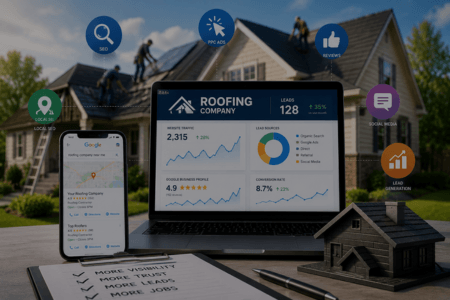

When most people search for a roofing company, they usually start the same way: they pull out their phone, type a problem into Google, and compare a few businesses before making a call.
That shift in buyer behavior is exactly why digital marketing for roofing has become such a major focus for roofing companies. It’s no longer just about having a website or posting occasional photos on social media. Roofing businesses now compete in search results, map listings, reviews, paid ads, and content visibility all at the same time.
The challenge is that many roofing companies invest in marketing without fully understanding which channels actually influence trust, visibility, and lead quality.
By the end of this guide, you’ll understand:
- What digital marketing for roofing actually includes
- Which strategies matter most for roofing businesses
- How homeowners typically choose roofing companies online
- Common mistakes that reduce lead quality and conversion rates
- What strong roofing marketing systems usually have in common
What Is Digital Marketing for Roofing?
Digital marketing for roofing refers to the online strategies roofing companies use to attract, educate, and convert potential customers.
This can include:
- Local SEO
- Google Business Profile optimization
- Roofing websites
- Google Ads
- Review generation
- Social media marketing
- Content marketing
- Email follow-up systems
- Retargeting campaigns
Unlike many industries, roofing marketing often depends heavily on trust, urgency, and local visibility. Homeowners are typically making high-cost decisions tied to property protection, insurance claims, storm damage, or long-term maintenance.
That means roofing companies are not just competing on price. They’re competing on credibility, clarity, responsiveness, and perceived professionalism.
Why Local SEO Matters So Much for Roofing Companies
Roofing is one of the strongest local-intent industries online.
Most searches happen with phrases like:
- “roofing company near me”
- “roof repair near me”
- “emergency roofer”
- “metal roofing contractor”
- “how to choose a roofing company”
Because of this, local SEO often becomes one of the foundational pieces of roofing marketing.
A strong roofing SEO strategy usually focuses on:
- Optimized service pages
- Clear location relevance
- Google Business Profile signals
- Consistent business information
- Helpful educational content
- Review quality and frequency
- Mobile-friendly website structure
Search engines want to show businesses that appear trustworthy, relevant, and easy for users to understand.
That’s why content quality and website structure matter more than many roofing companies realize.
If you want a broader breakdown of how structured marketing systems support long-term growth, this pillar guide goes deeper into the strategy side of digital marketing systems and business visibility.
You can also explore additional educational resources in the digital marketing blog category for related topics and marketing concepts.
How Roofing Websites Influence Conversions
A roofing website does more than display contact information.
For many homeowners, the website becomes the first impression of the business itself.
Visitors often make subconscious judgments within seconds based on:
- Page speed
- Navigation clarity
- Mobile usability
- Visual trust signals
- Photo quality
- Service explanations
- Review visibility
- Professional design consistency
This lines up closely with the “Seamless Navigation Blueprint” philosophy described in BestLyfe Group’s internal brand materials, which emphasizes reducing friction and helping visitors naturally move toward the information they need.
Roofing websites that convert well are usually:
- Easy to scan
- Fast-loading
- Clear about services
- Built around homeowner questions
- Structured for mobile users
- Designed with strong calls-to-action
- Focused on clarity over clutter
One common issue in roofing web design is what BestLyfe Group refers to as the “Déjà Vu Template Trap,” where generic templates make businesses feel interchangeable and less trustworthy.
That doesn’t necessarily mean every roofing company needs a fully custom site. It means the website should clearly communicate professionalism, credibility, and ease of use.
For readers exploring how web structure impacts user behavior, this resource on website design and user experience strategy provides additional context.
What Types of Roofing Content Actually Help SEO?
Content marketing for roofing works best when it answers real homeowner questions.
Search engines increasingly reward content that demonstrates:
- Expertise
- Relevance
- Practical value
- Clear organization
- Helpful explanations
Strong roofing content often includes:
- Roof maintenance guides
- Storm damage education
- Material comparisons
- Roofing lifespan expectations
- Insurance process explanations
- Seasonal roofing concerns
- Cost expectation articles
- Roofing terminology breakdowns
What homeowners usually search before hiring a roofer
Many roofing-related searches are informational before they become transactional.
Examples include:
- “How long does a roof last?”
- “What are signs I need roof repair?”
- “How much does a new roof cost?”
- “Can roof damage cause leaks later?”
- “What roofing material lasts longest?”
- “Should I repair or replace my roof?”
Companies that consistently answer these questions build stronger topical authority over time.
That authority can improve:
- Organic rankings
- User trust
- Website engagement
- Lead quality
- Branded search visibility
Are Google Ads Worth It for Roofing Companies?
Google Ads can work well in roofing, but they’re often expensive and highly competitive.
Because roofing leads can carry high customer value, cost-per-click pricing is usually higher than average in many markets.
That means campaign quality matters significantly.
Roofing companies often struggle with Google Ads when:
- Landing pages are weak
- Keywords are too broad
- Tracking is inaccurate
- Mobile experiences are poor
- Calls-to-action are unclear
- Ads attract low-intent traffic
The best-performing roofing campaigns usually align:
- Search intent
- Ad messaging
- Landing page clarity
- Geographic targeting
- Conversion tracking
- Follow-up systems
Digital marketing works best when all these elements support each other rather than operating independently.
How Important Are Reviews in Roofing Marketing?
Reviews are one of the strongest trust signals in roofing marketing.
Most homeowners compare:
- Review count
- Star ratings
- Recency
- Response quality
- Photo evidence
- Detailed customer experiences
Reviews influence:
- Local SEO rankings
- Click-through rates
- Conversion confidence
- Brand perception
Many roofing companies underestimate how heavily buyers rely on reviews when comparing businesses that offer similar services.
A company with slightly fewer years in business but stronger review consistency may appear more trustworthy online than a competitor with outdated or sparse reviews.
What Do Strong Roofing Marketing Systems Usually Have in Common?
High-performing roofing marketing systems typically focus on consistency rather than isolated tactics.
Professionals usually think about roofing marketing as a connected ecosystem rather than separate activities.
That ecosystem often includes:
- A technically solid website
- Strong local SEO foundations
- Clear service messaging
- Consistent review generation
- Educational content
- Accurate tracking
- Mobile optimization
- Fast lead response processes
Experienced marketers also understand that roofing customers often move through multiple stages before contacting a company:
- Awareness
- Research
- Comparison
- Trust evaluation
- Contact decision
Marketing systems that support every stage tend to create stronger long-term results than campaigns focused only on quick lead generation.
Frequently Asked Questions About Digital Marketing for Roofing
How much does digital marketing for roofing usually cost?
Costs vary depending on services, market competition, advertising spend, and campaign scope. Roofing marketing can range from small local SEO efforts to large multi-channel campaigns involving paid ads, content creation, and website optimization.
What is the best marketing strategy for roofing companies?
There is no single best strategy for every roofing company. However, local SEO, review management, website optimization, and educational content are commonly important because they support trust and local visibility.
How long does roofing SEO take to work?
SEO is typically a long-term process. Some improvements may appear within a few months, but stronger authority and ranking growth usually build gradually over time as content, trust signals, and optimization compound.
Do roofing companies need social media marketing?
Social media is not always the primary lead source for roofing companies, but it can help reinforce credibility, showcase projects, and keep businesses visible to local audiences.
What makes a roofing website convert better?
Fast loading speeds, mobile usability, clear service explanations, trust signals, easy navigation, and visible contact options all contribute to stronger conversion performance.
Is Google Ads or SEO better for roofing?
They serve different purposes. Google Ads can generate faster visibility, while SEO helps build long-term organic presence and trust. Many roofing businesses use both together depending on goals and budget.
Final Thoughts on Digital Marketing for Roofing
Digital marketing for roofing is ultimately about visibility, trust, and clarity.
Homeowners want to feel confident that the company they choose is professional, credible, responsive, and capable of solving their problem. Every part of a roofing company’s online presence contributes to that perception.
The businesses that typically perform best online are not always the loudest. They’re often the clearest, most consistent, and easiest for homeowners to understand.
As search behavior continues evolving, educational content, user experience, local SEO, and trust-building signals will likely remain central parts of successful roofing marketing strategies.
If you’d like to explore this topic further, related educational guides can help deepen your understanding of digital marketing systems, SEO structure, and conversion-focused website strategy.