
When was the last time you looked at your HVAC website through the eyes of a potential customer?
Many HVAC companies focus heavily on generating traffic through SEO, paid ads, referrals, and social media. But attracting visitors is only half the equation. If your website isn’t converting those visitors into calls, form submissions, or appointment requests, you’re likely leaving opportunities on the table.
A low HVAC website conversion rate doesn’t always stem from a lack of traffic. In many cases, the problem lies in how visitors experience the website once they arrive.
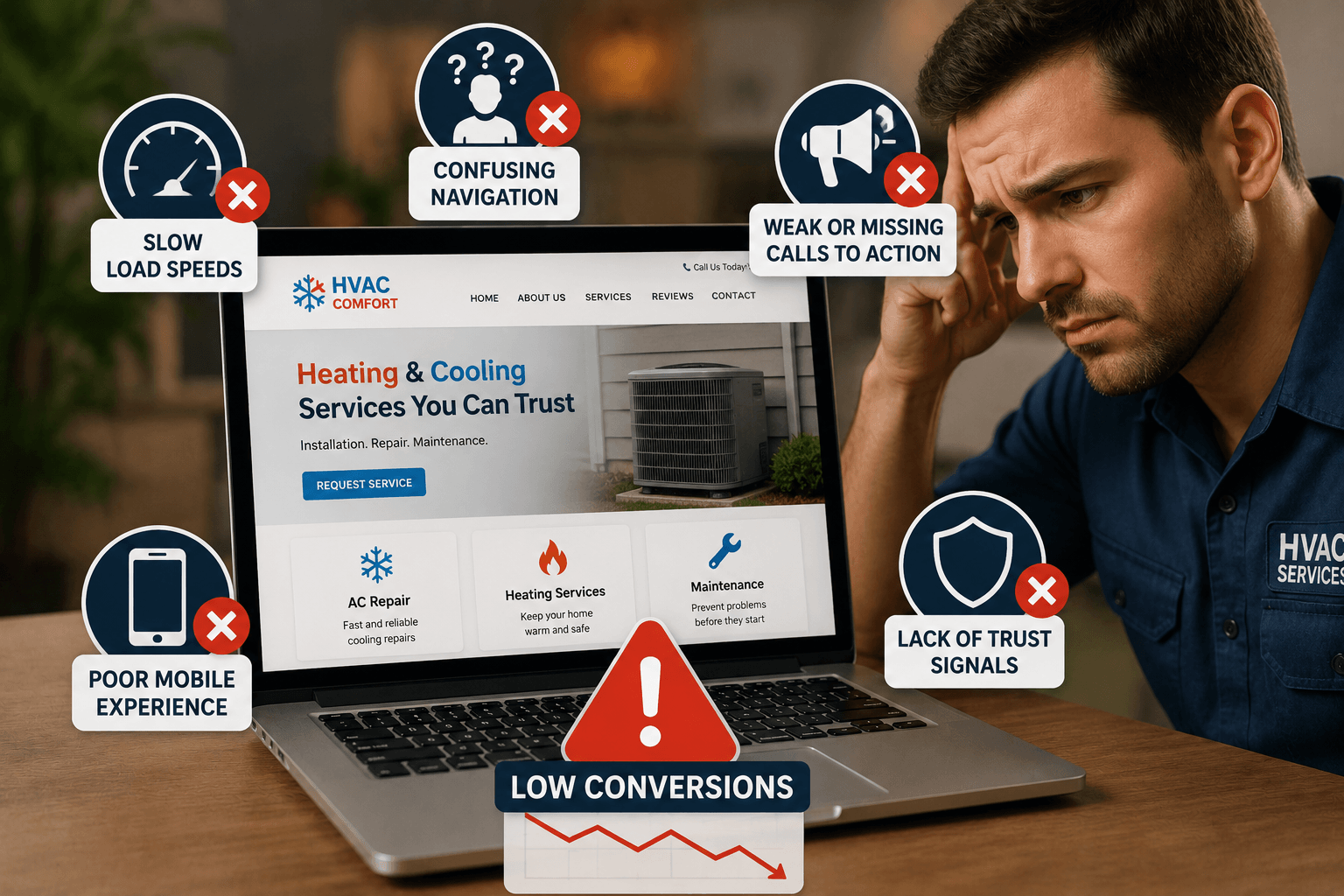
By the end of this guide, you’ll understand five common website issues that can hurt HVAC conversions and what they may indicate about your overall online presence.
What Is HVAC Website Conversion?
HVAC website conversion refers to the percentage of website visitors who complete a desired action.
Common HVAC website conversions include:
- Calling the business
- Filling out a contact form
- Requesting an estimate
- Scheduling service
- Signing up for maintenance plans
- Starting a live chat conversation
A website can attract thousands of visitors each month, but if very few take action, the site may not be effectively supporting business goals.
Sign #1: Your Website Loads Too Slowly
How Fast Should an HVAC Website Load?
Most visitors expect a website to load within a few seconds. If pages take too long to appear, many users leave before they ever see your services.
Slow websites often result from:
- Large image files
- Excessive plugins
- Poor hosting infrastructure
- Unoptimized code
- Outdated website platforms
For HVAC businesses, speed matters because many visitors are searching during urgent situations. Someone dealing with a broken air conditioner in summer or a heating issue in winter typically wants answers quickly.
Why Slow Load Times Hurt HVAC Website Conversion
A slow website can lead to:
- Higher bounce rates
- Lower engagement
- Fewer phone calls
- Reduced form submissions
- Poorer search visibility
Even small delays can create friction that discourages visitors from taking the next step.
Sign #2: Visitors Can’t Find What They’re Looking For
Is Website Navigation Affecting Conversion Rates?
One of the most overlooked conversion killers is confusing navigation.
Visitors should immediately understand:
- What services you offer
- Which areas you serve
- How to contact you
- What makes your company different
If users have to hunt for information, they often leave instead.
Common navigation issues include:
- Too many menu options
- Hidden contact information
- Cluttered page layouts
- Unclear service categories
- Poor mobile usability
A website should guide visitors naturally toward the information they need rather than forcing them to search for it.

Sign #3: Your Calls to Action Are Weak or Inconsistent
What Makes a Good HVAC Call to Action?
Visitors rarely convert without guidance.
A call to action (CTA) tells users what step to take next.
Examples include:
- Schedule Service
- Request an Estimate
- Call Now
- Book an Appointment
- Contact Our Team
Many HVAC websites make the mistake of either:
- Having no clear CTA
- Using too many competing CTAs
- Hiding CTAs below the fold
- Using vague language
If visitors aren’t sure what action to take, they often take no action at all.
Why CTAs Matter for HVAC Website Conversion
Effective calls to action reduce decision-making friction.
Rather than wondering what to do next, visitors receive a clear pathway forward.
Sign #4: Your Website Doesn’t Build Trust Quickly
What Trust Signals Do HVAC Customers Look For?
Before contacting an HVAC company, many homeowners want reassurance that they’re dealing with a legitimate and professional business.
Common trust signals include:
- Customer reviews
- Testimonials
- Certifications
- Licenses
- Service guarantees
- Team photos
- Years in business
- Industry affiliations
Without these signals, visitors may hesitate to make contact.
Why Trust Impacts Conversion Rates
Most customers compare multiple HVAC companies before making a decision.
If one website feels more credible and trustworthy, it often gains the advantage—even when pricing is similar.
Trust-building elements help reduce uncertainty and support conversion decisions.
Sign #5: Your Mobile Experience Is Frustrating
How Important Is Mobile Optimization for HVAC Websites?
For many HVAC companies, mobile users represent the majority of website traffic.
People often search for HVAC services from:
- Smartphones
- Tablets
- Mobile search results
- Google Maps listings
A website that works well on desktop but poorly on mobile can lose significant conversion opportunities.
Common Mobile Conversion Problems
Look for issues such as:
- Small text
- Buttons that are difficult to tap
- Slow mobile load times
- Forms that are hard to complete
- Pop-ups that block content
A poor mobile experience can create enough frustration to drive potential customers elsewhere.
How Professionals Evaluate HVAC Website Performance
Experienced marketers and website strategists rarely focus on traffic alone.
Instead, they evaluate the entire user journey.
Key indicators often include:
- Conversion rate
- Bounce rate
- Time on page
- Mobile usability
- Form completion rates
- Click-to-call activity
- Landing page engagement
Traffic without conversion is often a sign that visitors are encountering friction somewhere along the decision-making process.
This is why website performance is typically viewed as part of a broader marketing strategy rather than an isolated design issue.
For a deeper look at how websites fit into larger HVAC growth systems, this guide on building sustainable marketing systems for HVAC companies provides additional context.
Why Website Design and Conversion Optimization Work Together
Website design is often viewed as a visual exercise, but effective design goes much deeper.
A high-performing HVAC website balances:
- User experience
- Navigation clarity
- Trust building
- Mobile usability
- Conversion pathways
Understanding how website design strategy and user experience influence visitor behavior can help businesses identify areas for improvement.
Design decisions impact far more than appearance—they influence how easily visitors become customers.
Additional Resources for Learning About Website Performance
HVAC website conversion is only one piece of the digital marketing puzzle.
Businesses interested in related topics can explore additional resources within the website design and user experience knowledge center to better understand how websites contribute to overall business growth.
Frequently Asked Questions About HVAC Website Conversion
What is a good HVAC website conversion rate?
Conversion rates vary by traffic source, market, and service offering. Many businesses focus less on a specific benchmark and more on steadily improving performance over time.
Why does my HVAC website get traffic but no leads?
Common causes include poor user experience, weak calls to action, slow page speed, lack of trust signals, and mobile usability issues.
How can I improve HVAC website conversion?
Improving site speed, simplifying navigation, strengthening trust elements, optimizing mobile usability, and clarifying calls to action are common starting points.
Does website design affect HVAC SEO?
Yes. Search engines consider user experience factors such as page speed, mobile friendliness, and engagement signals when evaluating websites.
How often should an HVAC website be updated?
Regular updates help maintain performance, improve user experience, and ensure information remains accurate. Many businesses review their websites at least several times per year.
Can a slow website hurt conversion rates?
Yes. Slow loading times often increase bounce rates and reduce the likelihood that visitors will complete desired actions.
Conclusion
A website doesn’t need to be visually flashy to generate results, but it does need to make the customer journey easy.
If your HVAC website loads slowly, creates confusion, lacks trust signals, provides poor mobile experiences, or fails to guide visitors toward action, your conversion rate may suffer regardless of how much traffic you attract.
Understanding these common conversion obstacles is the first step toward creating a website that better supports both users and business goals.
If you’d like to explore this topic further, the related resources linked throughout this guide provide additional insight into website performance, digital marketing strategy, and user experience best practices.