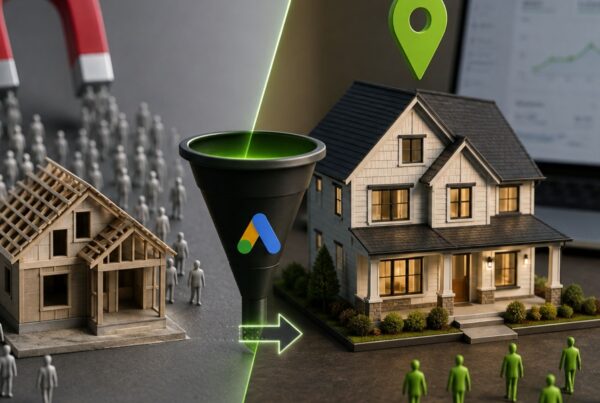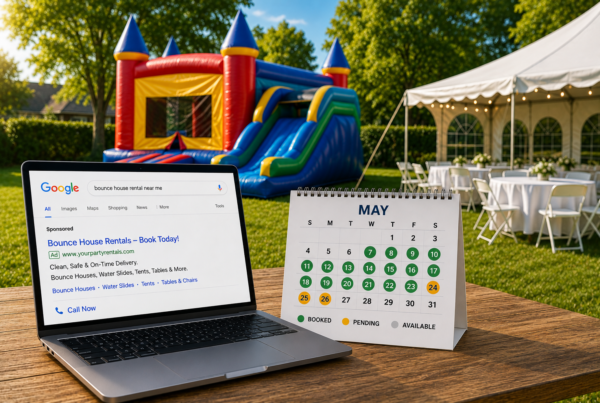

Google Ads can be one of the fastest ways for a home service business to generate calls, estimate requests, and booked jobs. It can also become a very efficient machine for donating money to Google.
The difference usually is not whether the platform works. It is whether your campaign is built around profitable services, strong buying intent, realistic economics, and a clear path from search to sale.
What You’ll Learn
- Are Google Ads Worth It for Home Service Businesses?
- What Makes a Search Worth Paying For?
- Start With High-Intent Service Searches
- Emergency Services Are Often Worth Testing
- High-Ticket Services Can Support Higher Acquisition Costs
- Branded Searches Usually Deserve Protection
- Local Services Ads May Be Worth Part of the Budget
- What Is Usually Not Worth the Spend?
- Negative Keywords Protect Your Budget
- Send Paid Traffic to the Right Landing Page
- How Much Should a Home Service Business Spend?
- Track Leads Beyond the Form Submission
💼 Business Owners
You’re trying to figure out whether Google Ads make sense for your home service company without wasting money learning the hard way.
📊 Marketing Managers
You’ve been asked to justify ad spend or fix campaigns that aren’t producing qualified leads—and you need a clearer framework.
🔧 Service Operators
You want more jobs, but you’re skeptical of agencies promising leads without explaining how those leads turn into profitable work.
Are Google Ads Worth It for Home Service Businesses?
Google Ads can be worth the spend when they target people who need a specific service, serve locations the company can profitably reach, and lead to a page designed to generate calls or estimate requests.
They tend to work especially well for services with:
- Clear customer urgency
- Strong local buying intent
- Healthy profit margins
- Meaningful average job values
- Reliable phone and form follow-up
- Enough operational capacity to accept more work
That includes many plumbing, HVAC, electrical, roofing, landscaping, painting, restoration, remodeling, pest control, and other home service companies.
⚠️ Important: Google Ads do not automatically create demand, fix a weak offer, improve slow response times, or turn an unconvincing website into a sales machine. Paid traffic amplifies what is already there.
When the foundation is strong, it can produce predictable opportunities. When the foundation is shaky, it can make expensive problems appear faster.
What Makes a Search Worth Paying For?
A search is worth paying for when the person behind it has a realistic chance of becoming a profitable customer.
That sounds obvious, but many campaigns are managed around clicks rather than economic value. A click only matters when it leads toward revenue.
Before bidding on a keyword, evaluate four factors:
1. The searcher’s intent
Someone searching “how does an air conditioner work?” is probably researching.
Someone searching “emergency AC repair near me” is probably trying to hire someone.
Both searches concern air conditioning, but they are nowhere near equal in commercial value.
2. The potential job value
A roofing replacement lead can support a higher acquisition cost than a small handyman request.
That does not mean smaller services are never worth advertising. It means your acceptable lead cost must reflect the revenue and gross profit the service can reasonably produce.
3. The likelihood of closing the lead
A lead is not automatically valuable because it completed a form.
Ask:
- Did your team answer the call?
- Was the customer in your service area?
- Did they need a service you provide?
- Were they qualified?
- Did an estimate get scheduled?
- Was the estimate presented?
- Did the job close?
The more accurately you track that journey, the better your advertising decisions become.
4. Your ability to deliver the service
There is little value in dominating searches for a service your team cannot schedule for six weeks.
Advertising should reflect your real capacity, geographic coverage, staffing, seasonality, and profitability. Otherwise, you may pay to generate demand that your operation cannot convert into a good customer experience.

Start With High-Intent Service Searches
For most home service businesses, the best starting point is a focused search campaign built around core services with clear commercial intent.
Examples might include:
- Emergency plumber
- AC repair company
- Electrician for panel replacement
- Roof leak repair
- Kitchen remodeling contractor
- Interior house painter
- Retaining wall contractor
- Water damage restoration
- Pest control company
- Garage door repair
These searches reveal a problem, a desired service, or both. That gives you a much better chance of reaching someone who is ready to speak with a company.
❌ Weaker Starting Points
- Plumbing tips
- Kitchen design
- Landscaping inspiration
- Best paint colors
- Types of roofing materials
Informational searches can support SEO and long-term content marketing, but they are often a weaker place to begin spending a limited ad budget.
✓ Stronger Starting Points
- Emergency plumber near me
- Kitchen remodeling contractor
- Retaining wall installation
- Exterior house painting cost
- Roof replacement company
These searches show clear service intent and readiness to hire a professional.
Emergency Services Are Often Worth Testing
Urgency changes behavior.
When a homeowner has water pouring through the ceiling, a failed air conditioner during extreme heat, or an electrical issue affecting the home, they are unlikely to spend three weeks casually comparing companies. They want a credible solution quickly.
That makes emergency campaigns attractive for businesses capable of responding promptly.
Potential emergency searches include:
- Emergency plumber near me
- Same-day AC repair
- 24-hour electrician
- Emergency roof repair
- Water damage cleanup
- No heat furnace repair
🚨 Critical: A campaign that creates emergency calls but sends them to voicemail is not a lead-generation strategy. It is an expensive way to irritate homeowners.
The catch is that urgent searches are often competitive and expensive. You should only pursue them when you have:
- Fast phone response
- Strong call handling
- Clear availability
- Accurate geographic targeting
- A useful emergency landing page
- A process for filtering poor-fit inquiries
High-Ticket Services Can Support Higher Acquisition Costs
A common mistake is judging every campaign by the lowest possible cost per lead.
Cheap leads are not always good leads.
A $35 lead for a low-margin service may be less valuable than a $180 lead for a project capable of generating thousands of dollars in gross profit.
💡 Pro Tip: The important metric is not just cost per click or cost per lead. It is the cost to acquire a paying customer relative to the profit that customer produces.
For higher-ticket services, Google Ads may be particularly valuable when campaigns target specific projects, such as:
- HVAC system replacement
- Roof replacement
- Electrical panel upgrades
- Bathroom remodeling
- Kitchen remodeling
- Whole-home painting
- Outdoor living projects
- Drainage installation
- Foundation repair
- Window replacement
Branded Searches Usually Deserve Protection
Branded campaigns target searches containing your company name.
Business owners sometimes question why they should pay for a click when the company already ranks organically.
There are several reasons branded campaigns may still be useful:
- Competitors may bid on your name
- You can control the ad message
- You can direct visitors to a highly relevant page
- You can promote financing, guarantees, availability, or special offers
- You can occupy more space on the search results page
- Branded traffic is generally highly qualified
⚠️ Important: Branded performance should be reported separately from non-branded campaigns. Otherwise, strong results from people who already know your company can make weaker prospecting campaigns look healthier than they really are.
Local Services Ads May Be Worth Part of the Budget
For eligible industries and markets, Local Services Ads can be valuable because they place local providers prominently in search results and typically charge for leads rather than standard website clicks.
They may work well for companies that have:
- Strong customer reviews
- Quick response times
- Accurate service categories
- Competitive business hours
- Proper licensing and verification
- A disciplined process for reviewing lead quality
However, they should not automatically replace standard search campaigns. Local Services Ads offer less control over keywords, landing pages, and campaign structure. Traditional Google Search Ads can provide more flexibility for targeting specific services, projects, and offers.
What Is Usually Not Worth the Spend?
Some areas of Google Ads deserve extra caution.
🚩 Broad, Vague Keywords
Terms like “contractor,” “home improvement,” or “landscaping” can mean almost anything. They may attract job seekers, DIY researchers, commercial buyers, homeowners outside your service area, or people seeking services you do not provide. Specificity usually improves relevance.
🚩 Services With Poor Economics
A campaign may generate legitimate leads and still be unprofitable. If the average ticket, close rate, repeat value, and margin cannot support the acquisition cost, the campaign needs a different strategy—or the service may not belong in paid search.
🚩 Locations You Cannot Serve
Wide targeting can make the campaign dashboard look busy while creating scheduling headaches and drive-time costs. Target the areas you can serve profitably, not every city your trucks could theoretically reach.
🚩 Searches With Unclear Intent
Certain keywords have multiple meanings. For example, “AC unit” might relate to products, repairs, installation, troubleshooting, parts, or pricing research. Search-term monitoring and negative keywords are essential for controlling that ambiguity.
🚩 Campaigns Without Tracking
Running ads without reliable tracking is like hiring a technician, sending them into the field, and never asking whether they completed a job. At minimum, track phone calls, contact forms, estimate requests, appointment bookings, qualified leads, closed customers, and revenue when possible.
Negative Keywords Protect Your Budget
Negative keywords tell Google which searches you do not want. They are one of the simplest and most important tools for reducing wasted spend.
Depending on the business, negative keywords might include terms related to:
- Jobs / Careers / Salaries
- Training / Certification
- DIY
- Free
- Wholesale
- Parts / Supplies
- Used equipment
- Rentals
- Commercial work
- Services you don’t offer
💡 Pro Tip: Negative keyword management is not a one-time setup. Search terms should be reviewed regularly because new irrelevant queries can appear as the campaign gathers data.
Match the Ad to the Exact Service
One generic ad should not try to sell every service your business provides.
A homeowner searching for drain cleaning should see messaging about drain cleaning. Someone searching for a roof replacement should see messaging about roof replacement.
Specific ads can address:
- The exact service
- The customer’s problem
- Your service area
- Availability
- Trust factors
- Financing
- Guarantees
- The next step
This improves continuity between the search, the ad, and the landing page. When those elements align, the customer does not have to work hard to determine whether your company can help. That clarity matters.
Send Paid Traffic to the Right Landing Page
Sending every click to the homepage is convenient for the advertiser, not necessarily for the customer.
A dedicated landing page should reflect the search that brought the visitor there.
For example, an electrical panel campaign should lead to a page about electrical panel services—not a general page listing every electrical service in tiny boxes.
An Effective Landing Page Should Clearly Communicate:
- What service you provide
- Where you provide it
- Why a customer should trust you
- What happens after they contact you
- How to call or request service
- What proof supports your claims
It should also work properly on mobile devices, load quickly, and keep important actions easy to find.
Do Not Let Automation Run Unsupervised
Google’s automated bidding and targeting systems can be powerful, but they need good inputs.
Automation learns from the conversion actions you feed it.
If every form completion is counted equally—even spam, sales pitches, and unqualified requests—the system may optimize toward more of the wrong activity.
Before leaning heavily on automated strategies, make sure you have:
- Meaningful conversion tracking
- Enough conversion data
- Accurate location settings
- Clear campaign segmentation
- Strong negative keywords
- A process for reporting qualified leads
- Realistic budget levels
Automation should support strategy, not replace it.
How Much Should a Home Service Business Spend?
There is no universal budget that works for every home service company.
A realistic starting budget depends on:
- Industry competition
- Average cost per click
- Number of services advertised
- Geographic coverage
- Average job value
- Current close rate
- Monthly capacity
- Seasonality
- Campaign goals
The budget must also be large enough to collect useful data. Spreading a small amount across ten services, twelve cities, and five campaign types often creates thin data and inconsistent visibility.
A focused campaign is usually more useful. Start with a manageable group of profitable services and priority locations. Gather enough information to understand lead quality, then expand based on evidence rather than enthusiasm.
Calculate What You Can Afford to Pay
A basic advertising model starts with customer economics.
Assume:
- The average completed job produces $2,000 in revenue
- Gross profit before advertising is $800
- One in four qualified leads becomes a customer
- You are willing to invest $200 to acquire that customer
At a 25% close rate, the business could afford to pay roughly $50 per qualified lead to reach a $200 customer acquisition cost.
💡 Pro Tip: Your target should be based on business math, not wishful thinking. For repeat-service companies, customer lifetime value also matters. A customer acquired for an initial service may later purchase maintenance, upgrades, or additional work.
Track Leads Beyond the Form Submission
One of the most important improvements a home service business can make is connecting campaign data to sales outcomes.
Instead of stopping at “Google generated 40 leads,” ask:
- How many were real?
- How many were in the service area?
- How many needed the advertised service?
- How many booked?
- How many received estimates?
- How many became customers?
- Which keywords created the best jobs?
- Which campaigns produced the most gross profit?
This helps separate activity from performance. It may reveal that one campaign generates fewer leads but substantially better customers. It may also show that a seemingly successful campaign produces many inquiries that never turn into revenue.
Your Follow-Up Process Affects Advertising ROI
Marketing does not end when the phone rings.
A slow response can erase the value created by an excellent campaign.
Homeowners often contact multiple companies, especially when the job is urgent. The company that responds quickly, communicates clearly, and makes scheduling easy gains an immediate advantage.
Your Process Should Address:
- Missed-call follow-up
- Speed to lead
- Text and email confirmations
- Estimate reminders
- Sales scripts
- Lead qualification
- Appointment availability
- Quote follow-up
Google Ads may create the opportunity, but your sales and operational systems determine whether that opportunity becomes a job.
Review Performance by Service, Not Just Account-Wide
Account-wide averages can hide important differences.
Imagine these results:
- Drain cleaning produces many inexpensive leads but a low average ticket
- Water heater replacement produces fewer leads but stronger profit
- Bathroom remodeling produces expensive leads but a high close value
- Emergency plumbing generates calls but creates scheduling strain
A blended account average may look acceptable while certain campaigns are losing money.
Break performance down by:
- Service
- Location
- Keyword theme
- Device
- Time of day
- Lead type
- Qualified lead rate
- Close rate
- Revenue
That is how you identify where the budget is actually working.
Give Campaigns Time to Produce Reliable Data
Paid advertising should not be managed with a panic button.
Daily results fluctuate. Search volume changes. Competitors adjust bids. Homeowner behavior shifts by day, season, and weather.
That does not mean poor performance should be ignored. It means decisions should be based on enough data to distinguish a real pattern from normal variation.
Early campaign management typically involves:
- Reviewing search terms
- Adding negative keywords
- Improving ads
- Adjusting geographic targeting
- Evaluating landing pages
- Confirming conversion tracking
- Comparing lead quality
- Refining budgets
A campaign should become more informed over time. Constantly rebuilding it before meaningful data accumulates can prevent that learning from happening.
Use Google Ads as Part of a Broader Growth System
Paid search works best when it is not expected to carry the entire company.
Google Ads can capture immediate demand. SEO can build longer-term visibility. Reviews strengthen trust. A conversion-focused website helps turn interest into action. Follow-up systems help convert opportunities into revenue.
Each part supports the others.
So, What Is Actually Worth the Spend?
For most home service businesses, the best advertising opportunities tend to share the same traits:
- The search reflects a clear need
- The service is profitable
- The customer is within a practical service area
- The company can respond quickly
- The ad matches the search
- The landing page makes the next step obvious
- Conversion tracking identifies real leads
- Sales data reveals which campaigns create customers
The most expensive keyword is not always the biggest problem. Paying for the wrong customer is.
A strong Google Ads strategy does not try to appear for every possible search. It concentrates spending where customer intent and business economics overlap.
That is where paid traffic becomes more than a line item. It becomes a growth channel.
Are Google Ads worth it for home service businesses?
+
Google Ads can be worth the spend when they target people who need a specific service, serve locations the company can profitably reach, and lead to a page designed to generate calls or estimate requests. They tend to work especially well for services with clear customer urgency, strong local buying intent, healthy profit margins, meaningful average job values, reliable phone and form follow-up, and enough operational capacity to accept more work.
What makes a search worth paying for in Google Ads?
+
A search is worth paying for when the person behind it has a realistic chance of becoming a profitable customer. Before bidding on a keyword, evaluate the searcher’s intent, the potential job value, the likelihood of closing the lead, and your ability to deliver the service profitably.
Should I run branded campaigns on Google Ads?
+
Branded campaigns targeting your company name can be valuable because competitors may bid on your name, you can control the ad message, direct visitors to highly relevant pages, and occupy more space on the search results page. Branded traffic is generally highly qualified, though branded performance should be reported separately from non-branded campaigns.
How much should a home service business spend on Google Ads?
+
There is no universal budget that works for every home service company. A realistic starting budget depends on industry competition, average cost per click, number of services advertised, geographic coverage, average job value, current close rate, monthly capacity, seasonality, and campaign goals. The budget must be large enough to collect useful data, and should be based on customer economics rather than arbitrary numbers.
What keywords should home service businesses avoid in Google Ads?
+
Home service businesses should typically avoid broad, vague keywords, services with poor economics, locations they cannot serve efficiently, and searches with unclear intent. Negative keywords should exclude terms related to jobs, careers, salaries, DIY, free, wholesale, parts, supplies, rentals, and services you do not offer. The correct list differs by campaign and should be reviewed regularly.
Do I need a dedicated landing page for each Google Ads campaign?
+
A dedicated landing page should reflect the search that brought the visitor there. For example, an electrical panel campaign should lead to a page about electrical panel services—not a general page listing every electrical service. An effective landing page clearly communicates what service you provide, where you provide it, why a customer should trust you, what happens after they contact you, and how to call or request service.
How do I know if my Google Ads are actually working?
+
Connect campaign data to sales outcomes. Instead of stopping at “Google generated 40 leads,” ask: How many were real? How many were in the service area? How many needed the advertised service? How many booked? How many received estimates? How many became customers? Which keywords created the best jobs? Which campaigns produced the most gross profit? This helps separate activity from performance.
Make Every Advertising Dollar Work Harder
Google Ads for home service businesses can create valuable opportunities, but only when the campaign is connected to the realities of the business. Your services, margins, availability, customer value, service areas, sales process, and website experience all affect what is worth the spend.
At BestLyfe Group, we build advertising strategies around that complete picture—not just clicks, impressions, and dashboard confetti.
Ready to find out where your advertising budget is working and where it may be leaking?
No pressure, no pitch — just a practical conversation about generating more qualified opportunities from paid search.