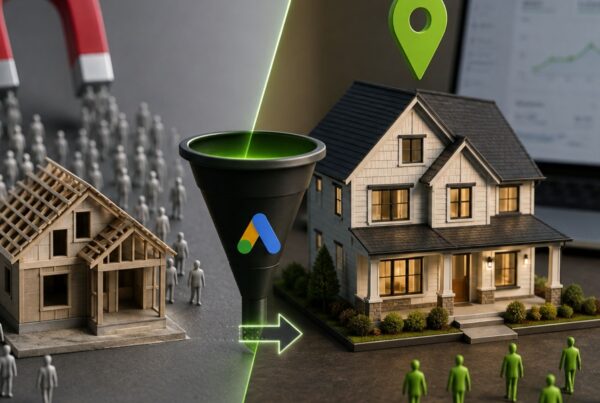

Running Google Ads should bring your electrical business more qualified leads—not drain your marketing budget. Yet many electricians find themselves paying for clicks that never become phone calls, estimates, or booked jobs. The reason? Showing up for the wrong searches.
A well-managed campaign can consistently generate profitable leads. A poorly managed one can burn through hundreds or thousands of dollars every month with very little to show for it. Understanding search intent is one of the fastest ways to improve your return on investment.
Table of Contents
- Who Is This Guide For?
- The Most Expensive Click Isn’t Always the Problem
- Search Intent Matters More Than Volume
- Negative Keywords Save Real Money
- Don’t Send Every Click to Your Homepage
- Geographic Targeting Makes a Huge Difference
- Avoid Broad Match Without a Strategy
- Measure Leads—Not Clicks
- Strong Ads Match Customer Intent
- Google Ads Work Best Alongside SEO
- Regular Optimization Prevents Waste
- Frequently Asked Questions
Who Is This Guide For?
You’re Running Ads Now
You’re getting clicks but not enough calls. Your Google Ads budget feels like it’s evaporating without producing reliable leads. You need to figure out where the waste is happening.
You’re Considering Google Ads
You’ve heard Google Ads can work, but you’ve also heard horror stories about wasted budgets. You want to understand what actually drives results before committing real money.
You Tried Ads Before
You ran campaigns in the past that didn’t work. They burned through the budget quickly with little return. Now you’re wondering if it was the platform’s fault—or something fixable in the setup.
The Most Expensive Click Isn’t Always the Biggest Problem
Many electricians assume high cost-per-click is the issue. Sometimes it is. More often, the real problem is paying for searches that were never likely to convert.
Consider these searches that electricians frequently pay for—but shouldn’t:
🚩 Searches That Drain Your Budget
🚩 Electrical engineer jobs
People looking for employment, not electrical services.
🚩 DIY electrical repair
DIYers trying to avoid hiring a professional.
🚩 Electrical classes
Students researching training programs.
🚩 Wiring diagrams
Technical research, not service intent.
🚩 Free electrical advice
Actively searching to avoid paying.
🚩 Wholesale electrical supplies
Supply buyers, not residential customers.
These searches might generate traffic. They rarely generate customers. Every irrelevant click reduces your budget for people who actually need an electrician today.
Search Intent Matters More Than Search Volume
It’s easy to chase high-volume keywords. But volume alone doesn’t pay the bills. Intent determines whether a click becomes a customer.
❌ Low-Intent Searches
How to wire an outlet
DIY research—no hiring intent
Electrical code requirements
Informational, not transactional
Electrician salary
Career research, not service search
✅ High-Intent Searches
Emergency electrician near me
Urgent need, ready to hire
Electrical panel replacement
Specific service, decision stage
EV charger installation
Clear buying intent
Whole home rewiring quote
Active shopping behavior
The second group reflects buying intent. Those searchers are much closer to hiring someone. Your campaigns should prioritize those opportunities.

Negative Keywords Save More Money Than Most Businesses Realize
One of the simplest ways to improve campaign performance is by building a strong negative keyword list. Negative keywords prevent your ads from appearing for searches you don’t want.
💡 Essential Negative Keywords for Electricians
- Free
- DIY
- Training
- Course
- Salary
- Jobs
- Apprenticeship
- School
- Diagram
- Supplies
- Wholesale
- Resume
Without them, Google may continue matching your ads to irrelevant searches. That’s money you could have spent reaching real customers.
“The fastest way to improve ROI isn’t spending more—it’s stopping the bleeding from bad clicks.”
Don’t Send Every Click to Your Homepage
Imagine searching for “EV charger installation.” You click an ad. Instead of finding information about EV chargers, you’re dropped onto a homepage listing twenty different services.
Most visitors won’t spend time searching for what they need. They’ll leave.
❌ Generic Homepage
- Twenty services listed
- No specific service info
- Generic “About Us”
- The visitor has to hunt
- High bounce rate
✅ Service-Specific Landing Page
- Clear service information
- Local relevance
- Trust signals
- Customer reviews
- Strong call to action
Better landing pages often improve Quality Score while increasing conversions. Each major service should have its own dedicated page.
Geographic Targeting Makes a Huge Difference
Many electricians accidentally advertise far outside their service area. That creates two problems:
Problem #1
Paying for leads you can’t service
Clicks from areas 50+ miles away drain the budget without producing revenue.
Problem #2
Reducing the budget for nearby customers
Every wasted click reduces spending in areas where you can actually do the work.
Proper location targeting focuses spending where your technicians actually work. If you only serve certain cities or counties, your campaigns should reflect that. More local relevance usually produces better lead quality.
💡 Pro Tip: Use radius targeting around your actual service locations, not broad county-wide targeting. A 15-mile radius from your shop often performs better than targeting an entire metro area.
Avoid Broad Match Without a Strategy
Broad Match can be useful when managed carefully. Without oversight, however, it often introduces irrelevant search terms.
Match Type Comparison
[panel upgrade]
Shows only for that exact search or very close variants. Highest control, lowest waste.
“panel upgrade”
Includes searches with the phrase plus additional words. Good balance of reach and relevance.
panel upgrade
Shows for related searches that Google thinks are relevant. Requires constant monitoring and a strong negative keyword list.
Many campaigns perform better when combining Phrase Match, Exact Match, and carefully managed Broad Match—alongside ongoing search term reviews. Regular optimization helps eliminate wasted spend before it becomes expensive.
Measure Leads—Not Clicks
It’s easy to celebrate high impressions, more clicks, or lower cost per click. But none of those automatically translate into revenue.
❌ Vanity Metrics
- High impressions
- More clicks
- Low cost per click
- High click-through rate
These look good in reports, but don’t necessarily grow your business.
✅ Revenue Metrics
- Phone calls
- Form submissions
- Booked estimates
- Cost per qualified lead
- Customer acquisition cost
These numbers reveal whether campaigns actually grow revenue.
Focus on metrics that directly connect to business growth. Everything else is noise.
Strong Ads Match Customer Intent
Successful Google Ads don’t simply describe your company. They answer the customer’s immediate problem.
Ad Copy Transformation
❌ BEFORE: Generic
“Trusted Electrical Company”
Doesn’t address urgency or specific need
✅ AFTER: Intent-Driven
“Same-Day Electrical Repairs”
“Licensed Electricians Near You”
“Panel Upgrades Done Right”
“Fast Emergency Electrical Service”
The closer your ad matches the searcher’s intent, the more likely they are to click—and convert.
Google Ads Work Best Alongside Strong SEO
Paid search delivers immediate visibility. SEO builds long-term authority. Together, they create a stronger overall marketing strategy.
Google Ads
✓ Immediate visibility
✓ Precise targeting
✓ Measurable ROI
✗ Stops when the budget runs out
SEO
✓ Long-term visibility
✓ Builds authority
✓ No per-click cost
✗ Takes time to build
Together
✓ Immediate + long-term
✓ Dominate search results
✓ Multiple touchpoints
✓ Sustainable growth
While Google Ads captures customers searching today, SEO helps your business become more visible over time without paying for every click. That’s why successful electrical contractors rarely rely on just one channel.
If you’re looking for a broader marketing strategy, our guide to building a complete digital marketing plan for electricians explains how SEO, paid advertising, content, and reputation management work together to drive sustainable growth:
Regular Optimization Prevents Budget Waste
Google Ads isn’t something you launch and forget. Markets change. Competition changes. Search behavior changes.
Successful campaigns require ongoing attention.
Essential Optimization Tasks
Weekly
- Review search terms
- Add negative keywords
- Check conversion data
Bi-Weekly
- Test new ad copy
- Adjust bids
- Analyze competition
Monthly
- Improve landing pages
- Refine targeting
- Review overall ROI
Small improvements made consistently often outperform dramatic campaign overhauls. The key is staying engaged with your data and making informed adjustments.
⚠️ Warning: Campaigns left unmanaged for 60+ days typically see 20-40% increases in wasted spend as irrelevant search terms accumulate and market conditions shift.
Stop Paying for Clicks That Never Had a Chance
Many electrical companies assume Google Ads don’t work. In reality, their campaigns simply weren’t aligned with how customers actually search.
The goal isn’t to attract the most clicks. It’s to attract the right customers at the right moment with the right message.
When campaigns are built around genuine search intent, proper targeting, and ongoing optimization, Google Ads becomes one of the most reliable lead generation tools available to electricians.
If you’re ready to improve campaign performance, explore our Google Ads management services for local businesses to learn how strategic campaign optimization helps reduce wasted spend while generating more qualified leads:
For additional insights into paid advertising, campaign optimization, and lead generation, visit our Google Ads learning center, where you’ll find practical guides designed to help business owners maximize every advertising dollar:
Frequently Asked Questions
Why do electricians waste money on Google Ads?
+
Most electricians waste money because they pay for clicks from searches that were never likely to convert—like DIY searches, job searches, or informational queries. Without proper negative keywords and search intent alignment, campaigns attract traffic instead of customers.
What are negative keywords, and why do they matter?
+
Negative keywords prevent your ads from showing for irrelevant searches. Common examples include “free,” “DIY,” “training,” “jobs,” and “salary.” Adding these saves budget by blocking searches from people who aren’t looking to hire an electrician.
Should electricians use broad match keywords?
+
Broad match can work when managed carefully, but it often introduces irrelevant search terms. Most campaigns perform better with a mix of Phrase Match, Exact Match, and strategically managed Broad Match—combined with regular search term reviews.
What metrics should electricians track in Google Ads?
+
Focus on lead metrics, not vanity metrics. Track phone calls, form submissions, booked estimates, cost per qualified lead, and customer acquisition cost. Clicks and impressions don’t pay the bills—actual customers do.
How important is geographic targeting for electricians?
+
Geographic targeting is critical. Many electricians accidentally advertise outside their service area, paying for leads they can’t service. Proper location targeting focuses spending where your technicians actually work, improving lead quality and reducing waste.
How much should electricians budget for Google Ads?
+
Budget depends on market competition and the service area. Many electricians start with $1,500-$3,000 per month to test what works. The key isn’t spending more—it’s spending smarter through proper targeting and ongoing optimization.
Can electricians run Google Ads themselves?
+
It’s possible, but requires ongoing time investment to prevent wasted spend. Most successful campaigns need weekly search term reviews, bid adjustments, and landing page optimization. Many business owners find better ROI by focusing on their trade while partnering with specialists for campaign management.
How long does it take to see results from Google Ads?
+
Google Ads can generate leads immediately once campaigns launch. However, optimal performance typically requires 30-60 days of data collection and optimization. The first month focuses on identifying what works, while subsequent months refine targeting and reduce waste.
Ready to Stop Wasting Ad Spend?
If you’d like a customized Google Ads strategy built around your service area, goals, and budget, let’s talk. No pressure, no pitch—just a straightforward conversation about what’s actually working for electrical contractors.