
You’re getting website traffic. People are landing on your pages. Maybe your plumbing company even ranks decently in Google.
But the calls? The quote requests? The booked jobs?
They’re not happening consistently.
That’s one of the biggest frustrations plumbing companies face with their online presence. Many assume that getting traffic automatically means getting customers, but plumbing website design is about far more than appearance alone.
A plumbing website needs to help visitors trust your business quickly, understand your services clearly, and take action without confusion.
In this guide, you’ll learn:
- Why plumbing websites often fail to convert
- What homeowners expect when visiting plumbing sites
- Which design elements influence trust and lead generation
- How mobile usability impacts plumbing conversions
- What strong plumbing websites usually have in common
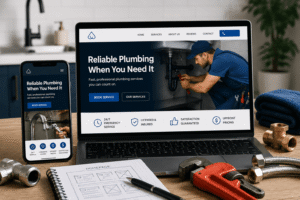
What Is Plumbing Website Design?
Plumbing website design refers to how a plumbing company’s website is structured, presented, and optimized for user experience.
That includes:
- Navigation
- Mobile responsiveness
- Page speed
- Service page structure
- Calls-to-action
- Trust signals
- Content clarity
- Visual hierarchy
- Conversion pathways
A plumbing website isn’t just a digital brochure anymore.
For many homeowners, it becomes the first impression of the company itself.
Visitors often decide within seconds whether a plumbing business feels:
- Trustworthy
- Professional
- Legitimate
- Responsive
- Easy to work with
That’s why conversion-focused design matters just as much as aesthetics.
Why Do Plumbing Websites Get Traffic But No Calls?
This is one of the most common questions plumbing businesses ask.
The answer is usually tied to friction.
Visitors may arrive on the site but leave because something creates hesitation, confusion, or distrust before they contact the company.
Common reasons plumbing websites fail to convert
Slow loading times
Plumbing searches are often urgent.
If a website loads slowly on mobile devices, users frequently leave before the page fully appears.
Confusing navigation
Homeowners typically want quick answers:
- What services do you offer?
- Do you handle emergencies?
- How do they contact you?
- Are you experienced?
- Can they trust you?
If visitors struggle to find information quickly, conversions usually drop.
Weak trust signals
People visiting plumbing websites often look for reassurance before reaching out.
That includes:
- Reviews
- Before-and-after photos
- Clear branding
- Licensing information
- Service explanations
- Real project imagery
Without trust signals, even high traffic may produce weak lead quality.
Generic website templates
Many plumbing websites look nearly identical.
This reflects what BestLyfe Group internally refers to as the “Déjà Vu Template Trap,” where overused layouts create a bland, interchangeable experience that weakens trust and differentiation.
When homeowners feel like they’ve seen the same site ten times already, it becomes harder for the business to feel memorable or credible.
What Makes a Good Plumbing Website Convert Better?
Strong plumbing website design usually focuses on reducing friction and helping users move naturally toward action.
This aligns closely with the “Seamless Navigation Blueprint” philosophy described in BestLyfe Group’s web design positioning materials, which emphasizes clarity, simplicity, responsiveness, and intuitive user flow.
What homeowners expect from plumbing websites
Visitors generally want:
- Fast answers
- Easy navigation
- Mobile-friendly layouts
- Clear service categories
- Visible phone numbers
- Quick quote options
- Helpful information
- Professional appearance
The easier a website feels to use, the more likely users are to stay engaged.
Why mobile design matters so much for plumbers
A large percentage of plumbing searches happen on phones.
That means plumbing websites need to:
- Load quickly
- Display clearly on smaller screens
- Keep buttons easy to tap
- Avoid cluttered layouts
- Prioritize readability
A desktop-focused site that performs poorly on mobile devices can quietly hurt conversion rates even if rankings remain strong.
How Important Is Website Speed for Plumbing Companies?
Website speed directly affects both SEO and user behavior.
Many plumbing visitors are dealing with:
- Leaks
- Water damage
- Drain issues
- Broken water heaters
- Urgent repairs
Patience tends to be low during those situations.
What happens when plumbing websites load slowly?
Users may:
- Leave immediately
- Return to Google
- Choose another plumber
- Lose trust in the company
Search engines also consider page speed when evaluating user experience quality.
That means speed influences:
- Rankings
- Bounce rates
- Engagement
- Conversion potential
What Plumbing Content Helps Build Trust?
Content is often overlooked in plumbing website design, but it plays a major role in conversion behavior.
Helpful plumbing websites usually explain:
- Services clearly
- What customers should expect
- Common plumbing problems
- Repair vs replacement considerations
- Maintenance tips
- Emergency situations
Why educational content improves conversion quality
Homeowners often search questions before contacting a plumber.
Examples include:
- “Why is my water pressure low?”
- “How much does drain cleaning cost?”
- “Should I repair or replace a water heater?”
- “What causes pipes to burst?”
Websites that answer those questions tend to create more confidence and engagement.
For readers exploring related educational resources, the website design blog category covers additional topics related to usability, conversions, and user experience.
Readers interested in the broader role of conversion-focused websites can also explore this overview of website design strategy and how site structure impacts customer behavior.
How Do Professionals Evaluate Plumbing Website Performance?
Professionals usually look beyond traffic alone.
A plumbing website can receive visitors while still struggling to convert leads effectively.
Metrics professionals often evaluate
These commonly include:
- Bounce rate
- Mobile usability
- Page speed
- Conversion rate
- Call tracking
- Form completion rate
- User behavior flow
- Session duration
Experienced marketers also evaluate whether website visitors can move naturally through the site without friction or confusion.
The goal is not simply attracting clicks — it’s helping users feel confident enough to take the next step.
Frequently Asked Questions About Plumbing Website Design
What makes a plumbing website convert better?
Fast loading speeds, mobile-friendly layouts, easy navigation, trust signals, and clear service explanations all help improve conversion performance.
How important is mobile design for plumbing websites?
Mobile design is extremely important because many plumbing searches happen on phones. Sites that are difficult to use on mobile devices often lose potential leads quickly.
Why do plumbing websites need SEO?
SEO helps plumbing websites appear in search results when homeowners look for plumbing services online. Strong SEO supports long-term visibility and lead generation.
How long does it take to improve plumbing website conversions?
Some improvements can impact conversions quickly, while larger changes involving SEO, content, or site restructuring may take longer to influence performance consistently.
What are common plumbing website mistakes?
Common issues include slow loading speeds, cluttered layouts, confusing navigation, weak calls-to-action, outdated designs, and lack of trust-building content.
Should plumbing websites include educational content?
Yes. Educational content helps answer homeowner questions, improve trust, support SEO visibility, and keep users engaged longer on the website.
Final Thoughts on Plumbing Website Design
A plumbing website should do more than simply exist online.
It should help visitors feel informed, comfortable, and confident enough to contact the business without friction or uncertainty.
That’s why plumbing website design is closely tied to:
- User experience
- Trust
- Mobile usability
- Clarity
- Speed
- Content structure
The websites that typically convert best are usually the ones that feel easiest to navigate and simplest to understand.
As online competition continues growing, conversion-focused design and strong user experience will likely remain central to how plumbing companies generate leads online.
If you’d like to explore this topic further, related educational guides on website structure, usability, and conversion-focused design go deeper into how these systems work together.